If you'd like to know when new newsletters are published
please register here to receive notifications



Responsible Tourism News is a "newsletter of record", containing the 10 most important Responsible Tourism stories of the month. 5,000 people subscribe to receive it every month. Please forward this to those you think may be interested – you can subscribe using the box on the right if you wish to contribute a story, email harold@haroldgoodwin.info
 sponsors the Global Responsible Tourism Awards™ There is further information about the 2024 Awards here The Global Award Winners will be announced on November 4th.
The 2022 Responsible Tourism Charter points out that responsibility drives sustainability, lists the most significant issues that need to be addressed, and asserts the importance of transparent reporting to demonstrate what is being achieved and avoid greenwashing. Responsible Tourism is about using tourism to make better places for people to live and visit. How can we “do tourism better”?
Blogs on Travel Tomorrow
Overtourism is not a new phenomenon
Are tourists the new pariahs?
A tourism resort for local people in Borneo
Aviation is pursuing business as usual, the consequences will last for years
Is a new tourism emerging?
1. Tourism's contribution to peace and international understanding - myth or reality? 
2. Adapting to Climate Change
3. Policing visitor behaviour
4. Overtourism
5. Edinburgh & New Zealand Tourism Tax
6. Cruise Industry Sustainability
7. Climate Change
8. Aviation failing to meet even its limited decarbonisation aspiration
9. Certification and Transparency
10. Miscellany
1. Tourism's contribution to peace and international understanding - myth or reality?
Julia Buckley, in an article published on CNN Travel this month addresses the question "How it all went wrong for tourism." Noel Josephides of Sunvil is quoted as being "ashamed" of the industry, the chaos was predictable years ago. Justin Francis is quoted remembering the impact of noisy American tourists in Bath when have was growing up there “I remember being astonished at these alien-like people, and how loud they were – shouting to each other... “They stood around and blocked the way. I felt invisible.” "The tourism industry forgot about its most precious asset: the goodwill of locals. The edifice collapses without that. It’s been lost in many places and will be hard to win back.” Tourism has gone badly wrong in many destinations, and not only in Europe. Krippendorf recognised in the 1980s that tourism is too often an extractive industry, using other peoples' places as destinations, taking more than it gives, and overwhelming local communities. For too long the industry, in destinations and source markets, mouthed sustainability and continued with business as usual in a race to the bottom. Local governments are beginning to respond to regain control of the sector and ensure that their place uses tourism for sustainable development rather than being used by it.
The sector has long argued that tourism contributes to peace and understanding between peoples. Some of it does, for example, Mejdi with their socially conscious dual narrative tours. Germany was a favoured destination for British holidaymakers in the 1930s and I remember my parent's generation view of American "guests" during WWII as "oversexed, overpaid and over here." It is perhaps not surprising that with major wars in the Middle East, Sudan and Ukraine, UN Tourism has chosen "Touuirsm and Peace" as the theme for World Tourism Day on Friday, September 27th António Guterres, United Nations Secretary-General has messaged "Tourism brings people together. On this World Tourism Day, we reflect on the profound connection between tourism and peace. By valuing and preserving cultural and natural heritage, it can help reduce tensions and nurture peaceful coexistence." The question is not whether tourism could foster peace and international understanding, the question is whether it does.
Dialogue can contribute - but how often does tourism create dialogue?
"How can Israelis and Palestinians achieve peace? Palestinian peacemaker Aziz Abu Sarah and Israeli peacemaker Maoz Inon discuss the immeasurable tragedies they've experienced growing up in the region — and how they choose reconciliation over revenge, again and again." 1,841,869 views | Aziz Abu Sarah and Maoz Inon | TED2024• April 2024
BBC Radio 4's Moral Maze debated Should Foreign Tourism Be Discouraged? Listen to the podcast.
On one level this is an argument about economics, but the implications are profoundly moral. People shouldn’t feel like second-class citizens in their own towns, but we also recognise the freedom to move, rest and discover. The affordability of travel makes mass tourism possible, but it’s lamented by those who see it as selfish, narcissistic and damaging to native cultures and the environment. And yet travel supposedly broadens the mind and the soul – a cultural exchange that can be a catalyst for self-improvement, make us more empathetic, and provide a livelihood for host communities. Should foreign tourism be discouraged? Or if it’s mass tourism we’re worried about, what can we do about it without holidays becoming an elitist pursuit?
2. Adapting to Climate Change
Climate change brings droughts and wildfires, coastal erosion, flooding and storms. The extreme weather events exacerbated by climate change will change when and where people choose to holiday and damage landscapes and the natural resources which local communities and the tourism industry rely on. In the Wayanad area of Kerala over 200 people were reported dead after two landslides caused by heavy rain. Just three weeks before the disaster "Kerala Tourism Minister PA Mohammed Riyas said in the state assembly in answer to a question that Wayanad was "dealing with an influx of more people than it can handle, a classic example of a place facing the problem of over-tourism". The management of the land where people live and earn from tourism requires a whole of government approach. The challenge is to coordinate government action across departments, India made the case during the G20 last year for convergence - all departments working together to deliver sustainable development from community economic and cultural benefits to safety in the face of extreme weather.
Fire scorches and scars the landscape, it does not recover quickly. Maui, Hawaii has lost nearly $ 1 billion which relied on tourism for 70% of its economy. Officially open for tourism since November 1st arrivals are down 25% in the first half of 2024 on 2023. Only 3.4 sq miles were burnt, out of 727 square miles but people don't want to drive through it be holidaying where people have lost everything.
"... many climatologists consider the Mediterranean a crucible for climate change because it is a semi-enclosed basin, where water circulation can quickly be affected by transient events, water temperatures rise faster than elsewhere, and more CO2 is released than is absorbed. There are nearly 150 ancient sites in the Mediterranean at risk from sea level rise.
Gopi Parayil, of Blue Yonder, learnt during Cyclone Aila in 2009 that the torus industry had the skills and resources to help, "By the time floods hit the Indian state of Kerala in 2018, “it didn’t take us even 30 minutes to bring together all our resources to respond to the crisis. … We were using our kayaks, our canoes, our boats, whatever we had, our life jackets and paddles … [to] go and rescue people,” he said, ultimately moving thousands of people to safety." As Parayil points out "“As a travel company we have access to shelter, accommodation, food and beverage, highly skilled human resources which can be deployed within such a short time because we are there in the hyper-local level, on the ground, all the time,” he said. Those are all things the humanitarian sector needs during a crisis, “and this is all sitting unutilized in the tourism industry.”
 The Joint Research Centre at the European Commission estimates that heat-related deaths in Europe could rise from 44,000 per year now to over 200,000 annually by 2100 while the number of deaths from cold can be expected to decline slowly. Planet Earth has just felt the warmest day in recent history, reaching 17.15ºC on 22 July 2024, according to Copernicus Climate Change Service (C3S) data. Athens has a "chief heat officer " ranking heat waves by threat level. Tokyo is building wind tunnels to naturally ventilate hot zones, Kuala Lumpur is experimenting with a district cooling system and Madrid is developing ancient Middle Eastern wind towers, t to harvest the breeze and cool parks and surrounding streets. Wien Energie has unveiled new intriguing cooling street furniture at the forecourt of the Spittelau waste incineration plant, cooled by water that returns to the plant through pipes after having cooled buildings.
Time Out has promoted seven countries for "coolcations" in Europe: Norway, Scotland, Iceland, Swiss Alps, Madeira, Portugal, Estonia and Slovenia.
3. Policing visitor behaviour
4. Overtourism
Caitlin Moran, has written an Op-ed in The Times I’m too scared to go on holiday to somewhere I’m not welcome" She concludes "The irony of all my travel agonising — my profound wish not to overcrowd somewhere I’m not welcome — is that I live in one of the biggest tourist hotspots in the world: London. London has 30 million visitors every year — clogging up the streets; taking selfies outside Nike Town; getting drunk in Leicester Square — and I find it all quite jolly. If I knew where they were coming from — Venice, say, or Amsterdam — we could swap places, on a kind of one-in, one-out basis." She suggests that it would be sensible to " build a Holiday Land, somewhere hot — people like hot places. People also like to take pictures of themselves in front of famous landmarks so they can post them on Instagram, with the caption “Another one crossed off the bucket list!” — so it would make sense to build replicas. A couple of pyramids; an Eiffel Tower; Michelangelo’s David; the Trevi Fountain; maybe a Buddhist shrine. And to stop all the housing stock being pillaged by Airbnb, you’d ram places with motels and hotels, with massive swimming pools, so everyone got a sun lounger. Et voilà! Holiday Land solves all the problems of mass tourism in one stroke." We already do this - think Disney and this tourism resort for local people in Borneo.
Overtourism a "blasphemy" according to Italy’s tourism minister Daniele Santachequoted in La Nazione newspaper "“the problem is managing and governing [tourism] as we have started to do since we have been in government. We are also preparing the ground for future challenges, from Milan-Cortina [2026 Winter Olympics] to the Jubilee [a 2025 religious festival in Rome] which will be an opportunity to make lesser-known realities known, build diversified tourist offers and enhance our wonderful villages.”
Venice has limited tourist groups to 25 people and tour guides will no longer be allowed to use loudspeakers to make themselves heard to clients. PBS Radio station WHYY broadcast a radio documentary "You Don’t Want to End Up Like Venice" Listen to it as a podcast
Oslo has produced a viral tourism advert "teaching us to 'life-see', not sightsee." August Jorfald, who directed the film and wrote the script, explained why his film has caught a new tourist: "I don't want the Disney World. I want to be at someone's kitchen table and drink wine from a milk glass." The clip begins "I wouldn't come here to be honest."
Valencia Nuria Montes, Valencia’s head of tourism, has announced that the Valencia region will fine homeowners as much as €600,000 ($647,000) for renting rooms for short-term vacations. The President of Valencia said The “unorderly growth” of short-term rentals “creates damaging effects which, in the case of tourist apartments, could create social problems, a drop in housing supplies and the consequent increase in prices,”
Seville " a review is underway checking up on the credentials of Seville’s rental apartment stock. Owners have had two years to act on rules introduced in 2022 stating that all rentals above the first floor must have their own independent entrance. ... The municipality [plans] to ask the state-run water company Emasesa to shut off the water supply to those properties unless the owners cease renting them or comply with the independent door requirement." Drought-prone Andalucia is seeking to reduce tourism rentals to reduce water consumption.
Japan: The screen blocking the Mount Fuji view introduced in May has been removed thanks to a drop in antisocial behaviour
The Save Windermere campaign in the English Lake District is raising serious concerns about the failure to adequately regulate both the growth of tourism and the treatment of sewage which is damaging Lake Windermere, demanding that the Lake District National Park Authority reject a planning application on sewage pollution grounds.
Santorini On 23 July Santorini experienced 11,000 cruise passengers, the carrying capacity is reckoned to be 8,000 according to a 2018 study by according to a 2018 by the University of the Aegean. There has been outrage on social media when Panagiotis Kavallaris, president of the Thira municipal community, posted an urgent plea online "“Emergency Announcement. Another difficult day for our city and island with the arrival of 17,000 visitors from cruise ships!!! We ask for your attention and we reduce our movements as much as we can !!!” , Nikos Zorzos, Mayor of Santorini has announced plans to better schedule cruise ship arrivals and condemned the government said it should stop issuing permits for “irrational tourist development”, which “consumes the place and reduces its advantage as a destination”, adding that “overbuilding” makes resources like water and electricity scarce.
Portugal in 2023 international arrivals were 7.7% up on pre-pandemic levels. "The Graça neighbourhood of Lisbon is so overwhelmed by tuk-tuks serving tourists, that some residents say they cannot leave their houses. .... The nearby town of Sintra is “in danger” . The WTTC advises that it is "the government that must continue to seek balance between such “unprecedented growth and opportunities” and ensure a country that is liveable for everyone." The Express reported that 'tourists pay more' for meals with locals having 'secret code', "According to a report by the Portuguese newspaper Expresso, the code for the lower prices is “transmitted verbally, in whispers or indicated on menus placed in inconspicuous or even hidden areas".
Encouraging tourists and trippers to visit less crowded places may relieve the pressure on over-touristed areas, but may spread the problem of overtourism to places lacking any infrastructure to cope with increased visitor numbers. In 2021 Breda University experimented in the eastern Dutch province of Overijssel with a new planning tool for tourists. "Travel with Zoey" highlighted the least visited spots as unmissable experiences. The research suggested that "a site’s renown is less important to tourists than its perceived accessibility and entertainment value." Amsterdam and Copenhagen are going to trial Zoey.
Rubbish and worse: Amsterdam is drowning under tourist-generated rubbish and being overrun by rats and seagulls, according to its residents. The actor Carlo Verdone says Rome is "filthy, choked with traffic and has a disastrous lack of public lavatories... If you spend 20 minutes looking out from Ponte Garibaldi or Ponte Sisto bridges, you’ll see someone drop their trousers and leave a souvenir. It’s shameful, unthinkable for a ‘normal’ European capital.”
Pro-Tourism: The first demonstration in favour of tourism took place at the end of August in Majorca. The Association of Food, Beverage, and Cleaning Distribution Companies (ADED) in the Balearic Islands has launched a campaign in support of the tourism sector, voicing concerns over increasing tensions and negative attitudes towards visitors. The New York Times has pointed out that ", Barcelona remains reliant on tourism, which contributes 14 per cent of the city’s revenues and directly employs 150,000 people. Hotels, vacation-home hosts, restaurant servers, kiosk owners — all are adamantly opposed to anything that might disturb the golden goose."
"My Barcelona is being destroyed by mass tourism – but kicking visitors out isn’t the answer" Xavier Mas de Xaxàs a writer for La Vanguardia. He writes " Tourism attracts more drug trafficking, petty crime and sex work, all of which has an impact on a city’s character. Local shops are often replaced by tourist-oriented businesses" and concludes his piece in The Guardian "... putting up barriers won’t give us back our Barcelona. It is a model for contemporary architecture and urbanism, for cutting-edge art, culture and food. Only by educating tourists and the tourist industry about the harms they are doing by treating my city as a playground – instead of a community of people who must be treated with respect – will the situation improve. And the tourists themselves will benefit too: making local friends and better memories to take back home."
5. Edinburgh & New Zealand Tourism Tax
Manchester was UK’s first city to bring in a tourist charge in spring 2023,. It raised nearly £2.8m in the first year,
In Scotland, Edinburgh, the Highlands and Aberdeen expressed support for a charge six years ago, saying they could not cope with the financial pressures that tourism management entails. Edinburgh has announced plans to introduce a fee by summer 2026, lead councillor Cammy Day saying it would bring “huge benefit” to the city and that £5m of the ensuing revenue would be spent on housing and 35% would be allocated for the arts, and there are reports of a council commitment to invest £5m of the new Tourist Tax into council & affordable housing. The Edinburgh charge is intended to be levied as a percentage on accommodation costs, with room providers responsible for collecting the fee. Some politicians among the Scottish Greens have already said the draft proposal of 5% is too low and that the figure should be around 8%. Paul Lawrence the new chief executive of Edinburgh city council
argues that street sweeping, pavements and potholes are underfunded and a visitor levy would enable the council to invest in the arts and the festival.
The transient visitor levy (TVL) covers hotels, B&Bs, self-catering accommodation and rooms and properties let through websites such as AirBnB. Council leader Cammy Day said "“It’s equivalent of a few pounds worth of a cup of coffee. The evidence that we’ve done and research from across the world shows a levy has no impact on tourism. ..“People don’t come here to see the insides of hotel rooms, people come here to see the world heritage centre, the castle, the palace, the hills, the sea around the city, the amazing capital that we are. I can’t see a few pounds putting somebody off visiting the city. If you can afford to spend hundreds of pounds on a hotel room, you can afford a few pounds to support the city that you are visiting.”
In October last year in an attempt to curb the expansion of short-term letting accommodation, Edinburgh introduced new regulations requiring hosts to license their homes if renting them as a short-term let, or face a fine of up to £2,500.'
New Zealand has announced that it will nearly triple tourism tax on all international visitors except Australians. The international visitor and conservation and tourism fees from 1 October to NZ$100 ($61.85) from NZ$35 (introduced 07/2019) to “ensure visitors contribute to public services and high-quality experiences while visiting New Zealand”. The tourism minister, Matt Doocey, said the levy ensures “international visitors contribute to high-value conservation areas and projects, such as supporting biodiversity in national parks
6. Cruise Industry Sustainability
The Mayor of Santorini has announced plans to reintroduce the digital berth allocation system, which spreads cruise arrivals throughout the day, to avoid masses descending on the island at the same time, it was previously applied in 2018 for one year. In Montenegro the historic town of Kotor with a population of 23,000 receives up to 5,000 cruise tourists per day and 500 cruise ships are expected in 2024. Currently, the landing fee is €1. There is debate about how much to raise the landing fee and what else might be done to manage visitor numbers sustainably.
Disney is to add four new ships to its cruise line by 2031. The Regional Court of Hamburg ruled for the plaintiff, the German Environmental Aid, saying TUI Cruises use of the phrase ‘2050 net-zero cruise operation’ is misleading, giving the impression that emissions would be avoided entirely in its cruise operation by 2050, without any evidence.
Transport & Environment (T&E) reports that cruise ships have doubled in size since 2000. In 1970 there were 21 cruise vessels at sea, today there are 515

T&E reports, that cruise ships were responsible for 17% more carbon dioxide in 2022 than in 2019 and their methane emissions rose by 500%. Over the last few years, liquified natural gas has become a popular alternative to traditional shipping fuels but there is one big downside to it: when burned, it releases methane, a greenhouse gas around 80 times more potent than CO2. T&E suggests that cruise ships are exempt from fuel duties, corporate taxes and most of the consumer taxes. By adding a 50 euro tax per cruise ticket, 1.6 billion euros a year could be generated globally. If that money were to be invested in the right research, it could make a real change in allowing the cruise travel industry to evolve and become more sustainable. More
As Jon Hood, of T&E , points out, as with aviation, the cruise industry's fuel is untaxed and their emissions are unpriced. In Southampton only around one in ten ships uses the shore power available, it is cheaper to burn diesel or marine gas oil. "When not plugged in, a single ship can emit as much diesel exhaust as 34,400 idling lorries to power operations while docked." "Compared to flights... , cruises produce considerably more carbon emissions per passenger-kilometre: twice as much as the equivalent flights plus hotel stays for the same period." More in this review article in The Guardian.
7. Climate Change

These two images, taken fifteen years apart in Switzerland starkly reveal the impact of climate change on our environment. Wildfires in Greece, the Balkans and Madiera, Sorm Lilian battering the UK, the 12th named storm of the season and 0range wind alerts are also in place for the Dutch and German coasts. Surging seas are coming for us all, warns UN chief Guterres said in a speech at the Pacific Island Forum Leaders Meeting in Tonga., "... greenhouse gases – overwhelmingly generated by burning fossil fuels – are cooking our planet ...” "“The small islands don’t contribute to climate change but everything that happens because of climate change is multiplied here.” Sea levels have risen an average of 9.4cm (3.7in) in the past 30 years but in the tropical Pacific, that figure was as high as 15cm. The fossil record shows that Greenland was once ice-free, it could be again.
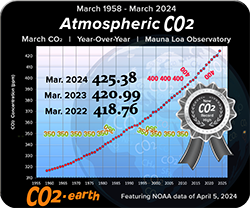
Climate Change"... is already having real-world impacts - droughts, floods, fires and storms have impacts on local people's lives (and the tourism industry) which will last for decades. The World Weather Attribution group of scientists, using observational data, conclude: "... the extreme temperatures reached in July would have been virtually impossible if humans had not warmed the planet by burning fossil fuels. In addition, the 1 in 10 year extreme July heat would have been 3°C [2.5 – 3.3°C] cooler in a world without climate change." The Conversation carries a thought-provoking piece on climate change and the Olympics. In Paris, heavy rain was followed by stifling heat and the city's wastewater treatment system was overwhelmed, when this happens it impacts all aspects of our lives from transportation to sport. There is debate about whether naming extreme heat events is a sensible way of raising awareness.
The G20 meeting in Brazil released a joint statement declaring that the participants “engage cooperatively to ensure that ultra-high-net-worth individuals are effectively taxed”. There will a long wait for implementation but a "2% tax on the world’s richest 3,000 billionaires could release between €184 billion and €230 billion globally"
The SBTi has released some suggestions on considerations for a more effective approach to scope 3 emissions.
8. Aviation failing to meet even its limited decarbonisation aspiration
9. Certification and Transparency
Recent research published in Tourism Management based on a longitudinal study of sustainability reporting by hotel groups reports that there has been an increase in transparency as the focus shifts from a market toward a stakeholder logic that originates in social and environmental accounting.
Travalyst has launched a list of 49 sustainable accommodation certification schemes which it says comply with their criteria i) third-party audit; ii) publicly available standards; iii) "Focuses on evaluating the impact of social and/or economic, and/or environmental factors, among others, as encompassed within, but not restricted, to the United Nations 17 Sustainable Development Goals." The list of certifications, standards and schemes compliant with Travalyst criteria is available online.
10. Miscellany


Other Responsible Tourism Newsletters
GreenAir
The World Sustainable Hospitality Alliance Net Positive Hospitality Podcast
The Sustainabilist UAE
Responsible Cape Town
Climate Change in 7 charts
Responsible Traveller, South Africa
Encounter Africa
You are receiving this email because you have been receiving RT News for some years or have recently subscribed online. Your name and email address is kept securely by our agent and used only to send you a copy of RT News. We will never sell or give your mailing address to any other organisation. Every edition of RT News sent by email comes with an unsubscribe function so if at any time you wish to cease receiving RT News, please unsubscribe. Our mailing list contains only your name and email address. If you have any queries, please email harold@haroldgoodwin.info